A scientific article by the Chairman of the IARA BoD, Anatoly Peskov, entitled "Globalization and the Problems of Depoliticization of International Sports", has been published
20.02.2025
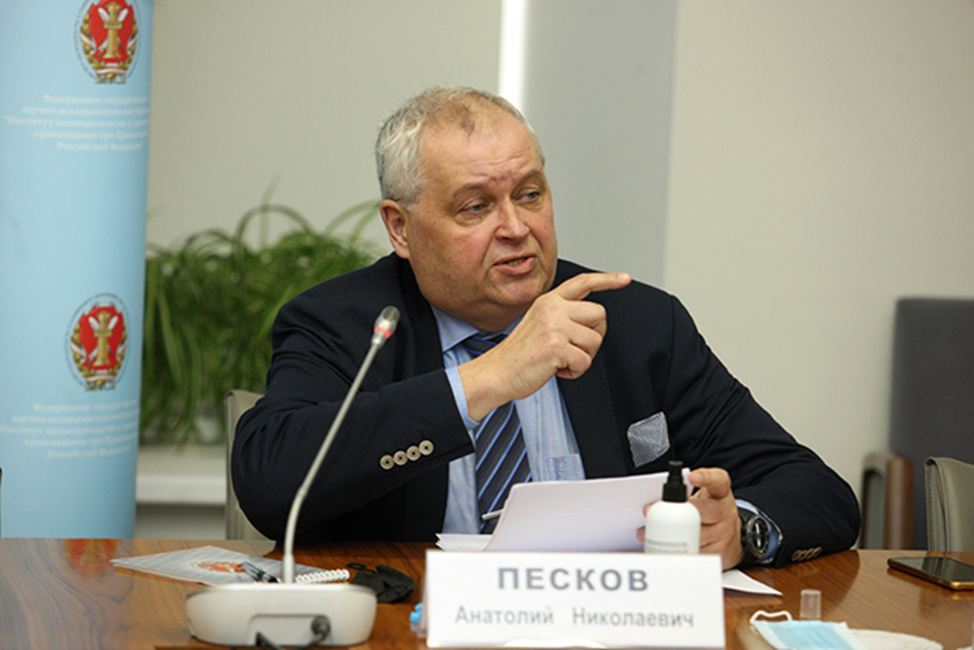
The leading Russian journal on sports law issues "Sport: Economics, Law, Management" (editor-in-chief Professor Alekseev S.V.) published in February 2025 a conceptual article by the head of our organization Anatoly Peskov, dedicated to the problems of depoliticization of international sports during the period of building a multipolar world on our planet. As it seemed to us, the author made quite bold conclusions and analytical assessments of the events taking place in international and Russian sports. In particular, he has his own independent view on the processes of globalization of the world and their impact on international sports. Thus, the author does not agree with the assessments of some Russian political scientists and Kremlin propagandists, who evaluate the words "globalization" and "globalists" exclusively negatively. The author asks questions. Is the idea of globalization so bad? And what is wrong with the fact that humanity strives for unification and peaceful existence of all peoples on our planet? In his opinion, there is nothing wrong with this. Moreover, the idea of globalization of the world, as he believes, meets the interests of the development of humanity and the preservation of peace on our planet. It is no coincidence that the best minds of humanity, including Albert Einstein, Franklin Roosevelt, Mahatma Gandhi and Jawaharlal Nehru, have always advocated globalization and the strengthening of the role of international institutions in the life of humanity. However, according to the author, there are "dark" forces on the planet that want to destroy the unity of humanity and take control of human society, and among them are many famous politicians, bankers, members of royal families and other famous people who are part of the so-called "deep state" and various secret occult organizations. In his opinion, on our planet, under the guise of globalization, processes are taking place that are not aimed at uniting people, but at destroying human society, world religions, families, other traditional social communities and international institutions of human cooperation. The same disintegration processes are taking place in international sports. In particular, for political reasons, thousands of athletes from Russia and Belarus are deprived of the opportunity to compete in international sports competitions, forcibly isolated from the international sports community. These athletes are forced to march in columns with neutral clothes and listen to neutral anthems for many years. At the same time, no one in the international sports community cares that these athletes and their sports organizations are not guilty of starting wars, annexing new territories to their countries, or doping scandals organized by politicians and officials from different countries. According to Anatoly Peskov, the International Olympic Committee, which imposed sanctions against Russian and Belarusian athletes in connection with the events in Ukraine, not only violated the fundamental principles of the Universal Declaration of Human Rights, but also the norms of the Olympic Charter itself. In this regard, a number of questions arise. Athletes from which countries will be punished by the IOC in the form of political and ethnic segregation? Perhaps it will be Iran, North Korea, Venezuela, Cuba or China? Will such boycotts lead to the final destruction of the Olympic movement and international sports? According to Anatoly Peskov, we do not find answers to these questions in the current activities of the International Olympic Committee. Moreover, the author questions the legitimacy of the IOC in general. He claims that IOC members, as many people think, are not directly elected by national sports organizations. More than half of the IOC members (55%) have nothing to do with sports at all, they are representatives of royal, aristocratic, financial and other elites. All decisions are made by this organization without taking into account the opinion of national sports organizations and ordinary athletes. It is almost impossible to challenge the political and unfair decisions of the IOC, because the IOC is the founder of the Court of Arbitration for Sport in Lausanne and controls the activities of international sports federations. Anatoly Peskov believes that all this does not look like a democratic system of international sports management and, to a greater extent, looks like a historical anachronism. Our author is not alone in his assessment of the IOC's activities. Proposals to reform this organization are increasingly being voiced not only in Russia but also in other countries. The article not only criticizes the existing world order in international sports, but also proposes specific measures to reform and depoliticize international sports. In particular, the author proposes creating an independent Committee for the Management of International Sports in the UN with broad participation of representatives of all international and national sports organizations, as well as a new system of international sports courts that would allow challenging decisions of international sports and anti-doping organizations, as well as filing appeals against decisions of existing international sports courts. In his opinion, such courts should function under the UN and regional associations of states (the European Union, the Commonwealth of Independent States, BRICS, the Shanghai Cooperation Organization and others), these courts should have independent sources of funding and be free from the influence of politicians, as well as international and national sports organizations. In addition, the article proposes to establish sports immunity from criminal prosecution of individual countries for the heads of international sports organizations, as well as athletes during international sports competitions. This, in the author's opinion, would eliminate the use of criminal repression against representatives of international sports for political purposes. We can probably agree with this suggestion of the author. Everyone remembers, for example, how much noise there was around the punishment and removal of FIFA and UEFA leaders Blatter and Platini after their decision to hold the World Cup in Russia in 2014. However, in July 2022, the Swiss Criminal Court acquitted these individuals because no evidence of their financial abuses was provided. Today, there is no guarantee that this practice of criminal repression against unwanted representatives of international sports will continue and that any Russian or Belarusian athlete or head of a sports federation will not be prosecuted by the US FBI in accordance with the Rodchenkov Act, which provides for criminal punishment of up to 10 years in prison and a fine of up to one million US dollars for "international fraud" against American athletes. However, in the author's opinion, the introduction of the sports immunity institute should not mean that corrupt international sports officials will not be punished for their criminal actions committed in the sphere of international sports. On the contrary, their responsibility, as he believes, for these crimes should be increased, but within the framework of international criminal law and international treaties. In addition, the article proposes measures to protect the rights of Russian athletes in international sports. At the same time, the author, as it seems to us, critically evaluates the activities of Russian sports officials in this direction. Of course, he notes in the article, it is possible to endlessly use various “loopholes” to try to restore the rights of Russian athletes in international sports federations, the IOC and WADA. Russian sports officials can also file numerous useless lawsuits with the Court of Arbitration for Sport in Lausanne. Russian sports officials can also continue to finance these international sports and anti-doping organizations at the expense of Russian taxpayers, spending huge amounts of money on their maintenance. Russian sports officials can also continue to encourage the activities of “neutral” athletes with “neutral” souls, and consider them heroes, and calmly watch as outstanding Russian athletes leave Russian high-performance sports and change their Russian citizenship. At the same time, Russian officials can humiliatingly wait for a favorable attitude towards Russian and Belarusian athletes for many years, without achieving any positive results. However, in the author's opinion, it is possible to implement another policy in the sphere of protecting the rights of Russian athletes, a more radical and decisive one. In particular, to begin actively creating new international sports federations and anti-doping organizations with the participation of friendly countries and independently organizing international sports competitions with the participation of all interested athletes from friendly and unfriendly countries. It is also possible to create new international non-governmental organizations capable of taking on the implementation of coordination tasks currently carried out by the IOC and WADA. Of course, this will require a certain amount of time, financial resources, the creation of a new legal framework for national sports law that excludes the monopoly right of the IOC and WADA to hold international sports competitions. Probably, to someone, these proposals, as the author believes, will seem excessively revolutionary today. However, in his opinion, they are dictated by the harsh realities of creating a multipolar world divided into friendly and unfriendly states, and the reluctance of Western politicians to allow Russian athletes to participate in international sports competitions under the flag of their country. Are the proposed measures aimed at dividing international sports and the Olympic movement? The author believes that they are not. This is Russia's defensive reaction to the discriminatory and political sanctions of the IOC; WADA and the international sports organizations subordinate to them. The main goal of these countermeasures is to prevent the isolation of Russian sports and protect the rights of Russian athletes. Our athletes, as Anatoly Peskov is convinced, must necessarily compete in international competitions under their national flag with a sense of pride for their country. They must be confident that our state will never again allow their national dignity to be humiliated and will protect their rights. However, there is a naive hope: maybe someday or even in the near future, politicians from the West and the East will sit down at the negotiating table, the world will unite again and there will be no need for these countermeasures. In conclusion, we should still criticize the author a little, as always, for his naive thoughts about the complete depoliticization of sports and holding international sports competitions without national symbols, where athletes from different countries will go together, in his words, as "brothers and sisters" under a single Olympic flag, showing an example of peacefulness to the whole world. It seems that politics will never completely leave sports as long as ambitious statesmen and religious figures exist, proclaiming the exclusivity and priority of their national interests and religious views. However, we really want Anatoly Peskov's naive thoughts to come true someday and for humanity to unite. Therefore, today we should all think about how to stop excessive politicization and the Cold War in international sports, revive the spirit of the Olympic truce and return international sports to the channel of friendship between peoples. This is the main issue on the agenda for the overall development of international sports today.
 К списку новостей